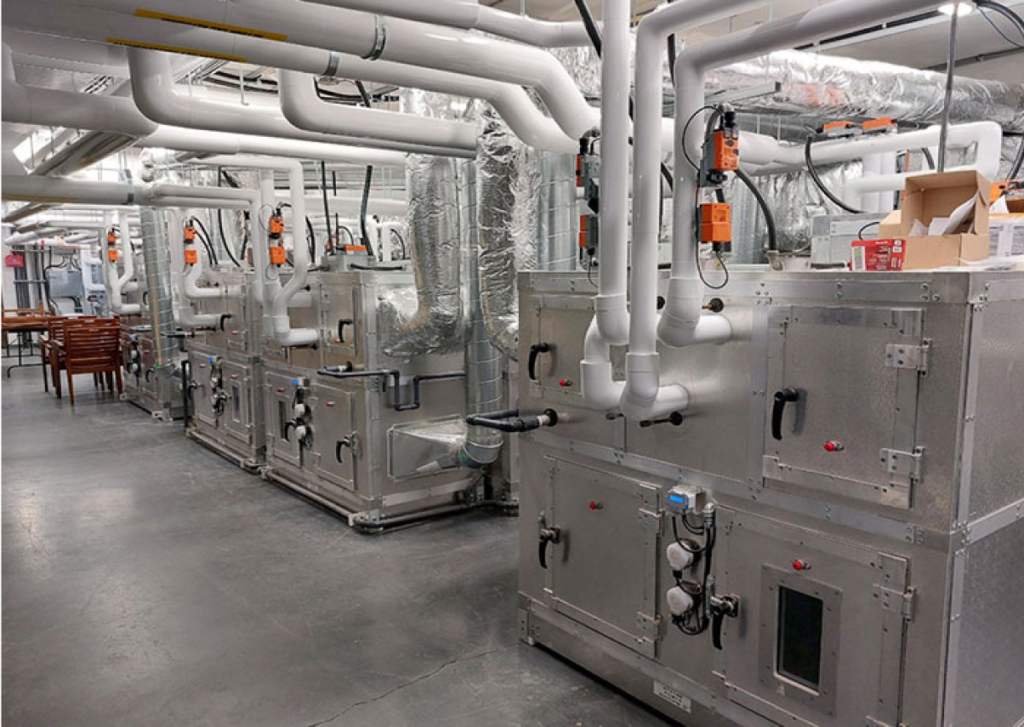
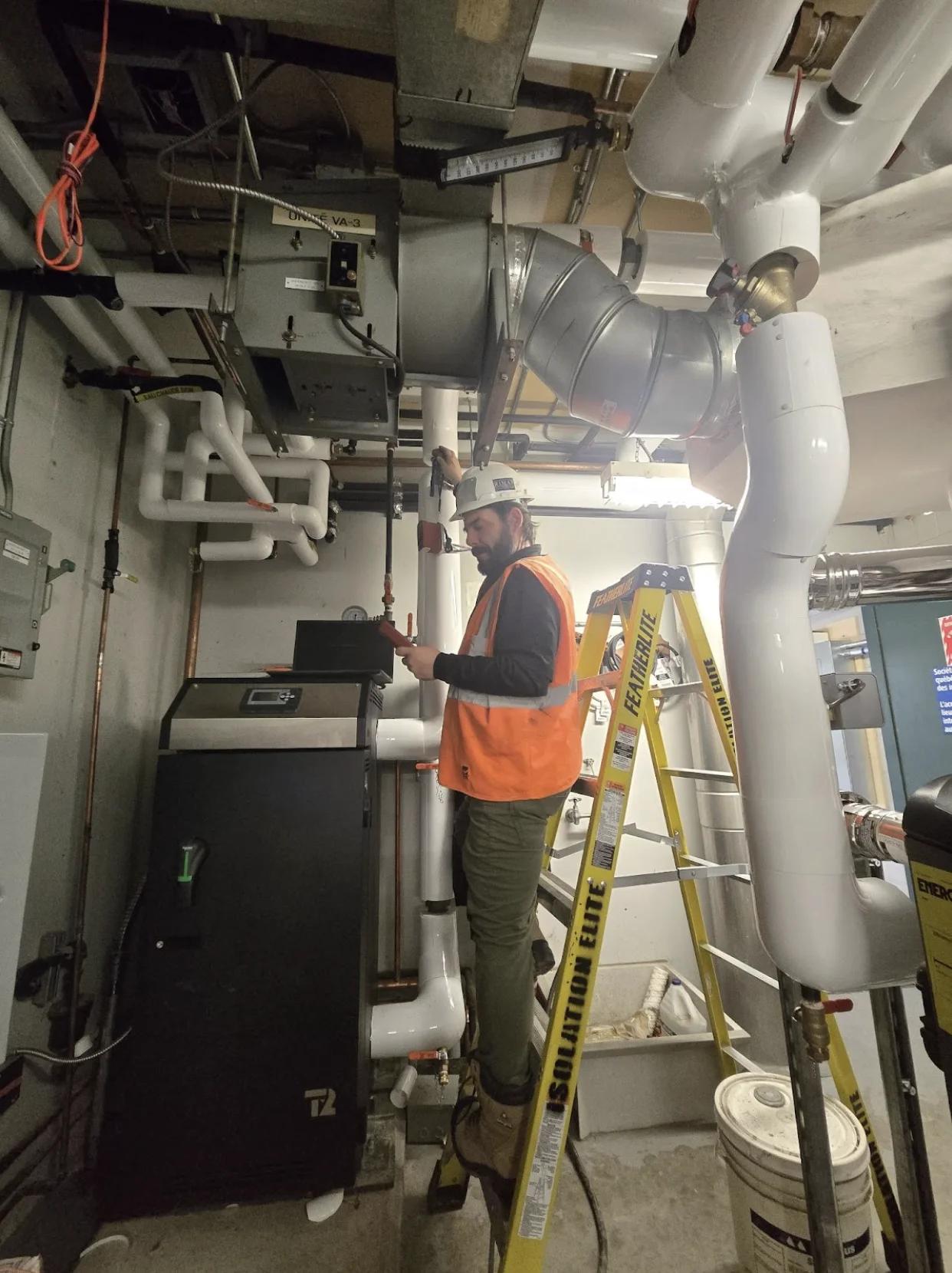
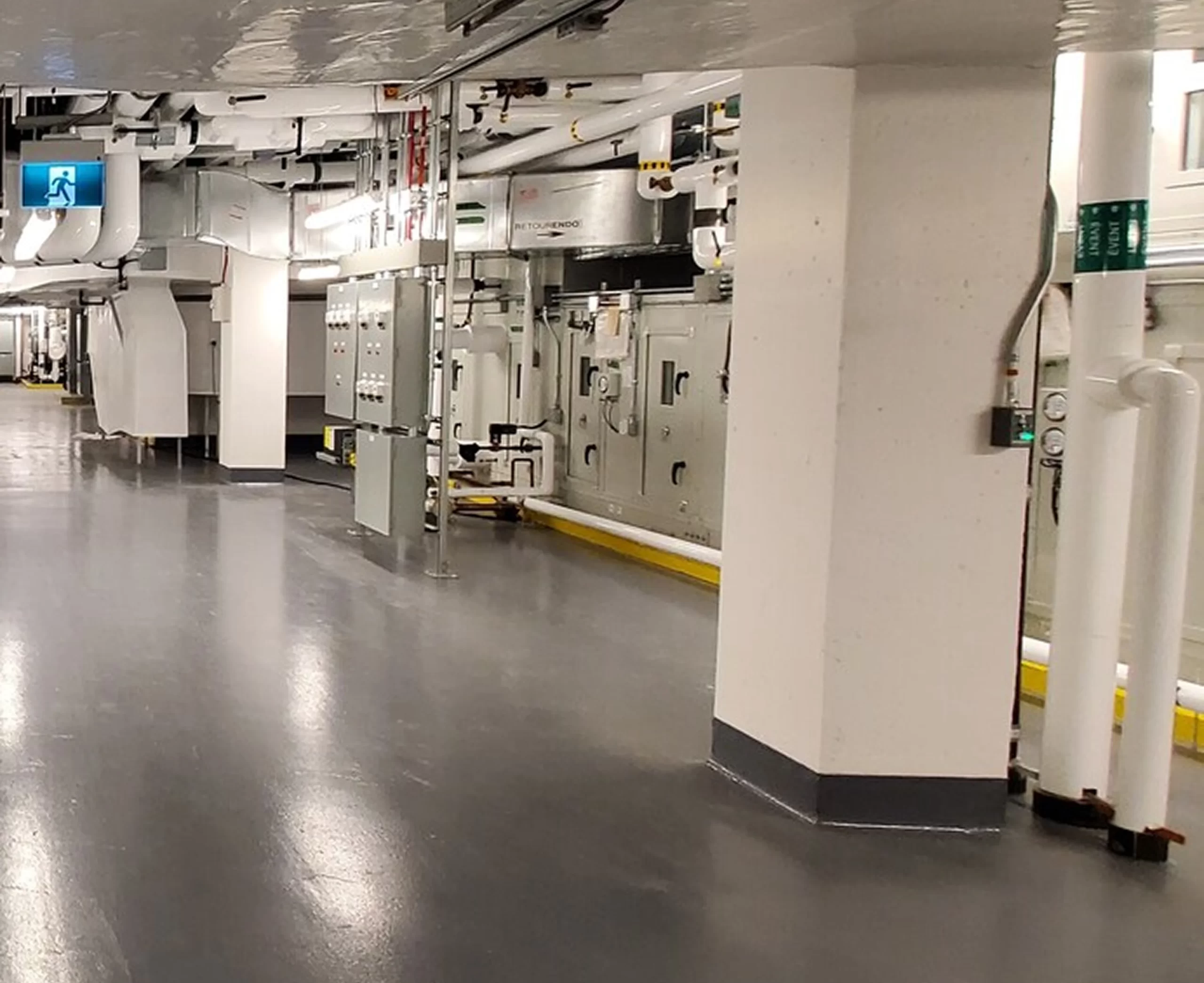
When the Quebec summer heat settles in, even the most robust HVAC systems can feel the pressure. For large commercial buildings, the stakes are higher. You’re not just keeping a single household cool. You’re maintaining air quality, system efficiency, and occupant comfort across thousands of square feet, all while keeping energy bills in check.
At SMP LeBlanc, we get a firsthand view of what can go wrong and, more importantly, how to fix it before it snowballs. This summer, we’re sharing the top five HVAC challenges that creep up in large commercial buildings, especially the kind we’re called in to support.
We’ve been called in severally behind the scenes to support some of the most recognizable institutions in the province. Our work takes us from cultural landmarks like Théâtre du Nouveau Monde to downtown towers like Le 900 Saint-Jacques.
Let’s dig in.
1. Uneven Cooling Due to Poor Air Balancing
This one tends to show up first, and hit hard.
You might have all the right equipment in place, but if airflow isn’t balanced properly across zones, certain areas will feel like a sauna while others could pass for a walk-in fridge. This becomes especially noticeable in summer when outdoor temperatures swing upward and internal loads (think: people, lights, equipment) are maxed out.
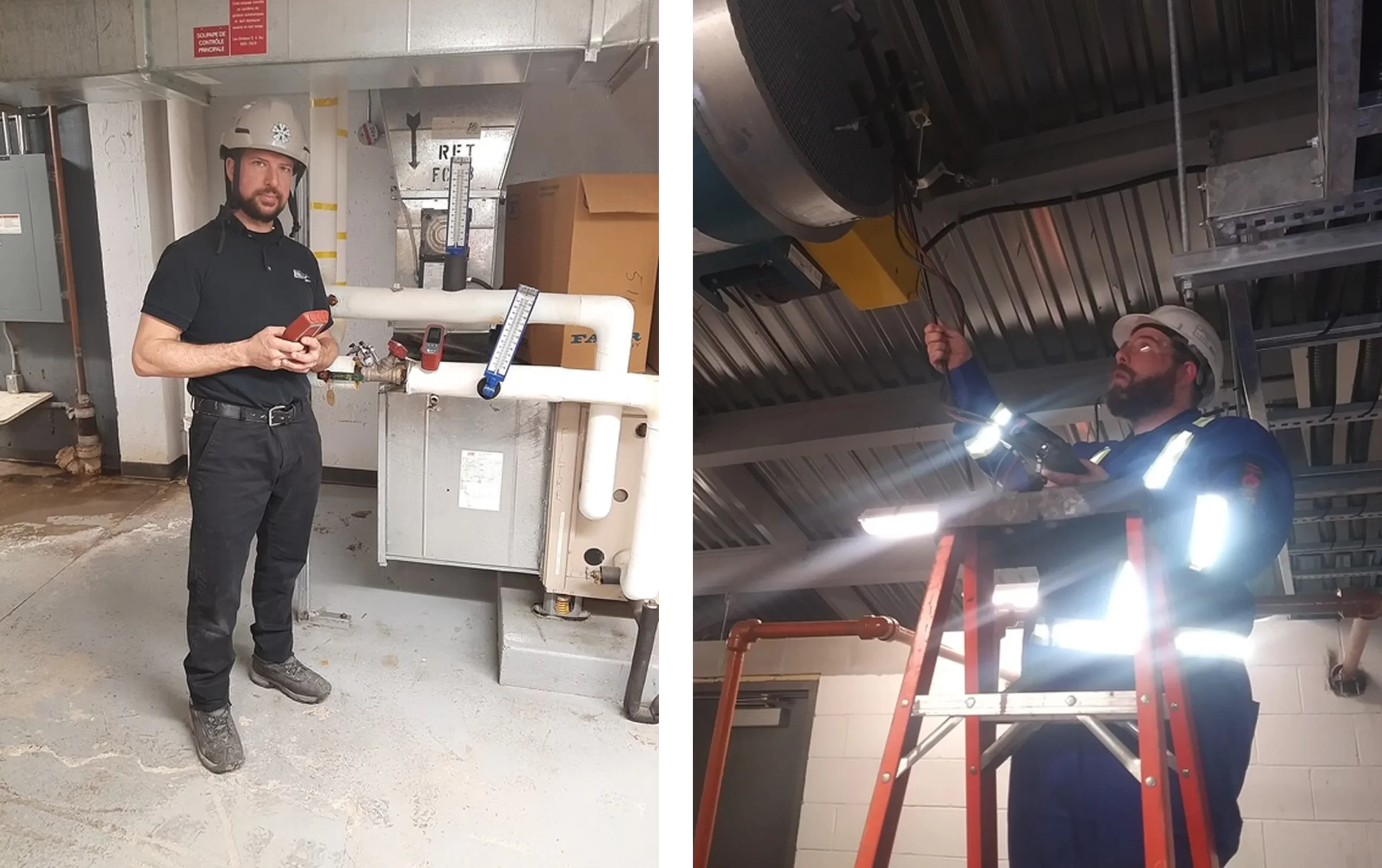
At SMP LeBlanc, we’re often brought in to perform air balancing in these kinds of situations. Air balancing is often the first step in getting things back on track. Our team goes zone by zone, room by room, measuring actual airflow and comparing it to design specifications. If something is off, we adjust dampers, calibrate air volume, and fine-tune fan speeds until the system performs the way it was meant to.
Our job is to make sure the airflow matches what was designed, whether that’s in a boardroom on the 15th floor or the main stage of a performance hall.
2. Duct Leaks That Go Undetected Until It’s Too Late
Once the airflow side is in check, the next step is often duct testing.
Even the most balanced system can get tripped up if your ducts aren’t holding up. Leaks, pressure drops, or poor insulation can all sabotage performance, and in summer, that means warmer air, higher bills, and reduced system lifespan.
Our team performs both visual inspections and pressure tests to pinpoint these issues. We look for anything that compromises integrity, like leakage at joints or disconnected sections hidden behind drywall or above drop ceilings.
In some buildings, access is limited or operational hours are strict. That’s why we work off-hours, weekends, evenings, even pedagogical days for institutions, just to get in and out without disrupting tenants or staff. That’s also why we document every airflow rate, damper position, and pressure readout in clear, client-ready reports.
For Le 900 Saint-Jacques, coordination was key. The building was still in active construction during Phase 1, and every step had to be timed and sequenced carefully. But we’ve done this enough times to know that great planning keeps surprises to a minimum.
3. Overloaded Zones Caused by Internal Heat Gain
You’d be surprised how often HVAC systems get blamed when the issue is actually internal heat gain. Lighting, IT rooms, large groups of people, these factors stack up fast in summer, especially during events or busy working hours.
This challenge comes down to smart design and informed tweaks. During balancing, for instance, we sometimes reassign airflow volumes or recommend system zoning changes to help one part of the building carry less load. It’s not always a major overhaul. Sometimes a small redistribution is all it takes to restore comfort.
This is why detailed measurement matters so much. Without the numbers, you’re just guessing.
We saw this in action at Théâtre du Nouveau Monde. Our focus was on the newly added sections. Even in brand-new spaces, ensuring airflow hits the design targets takes careful calibration. That’s what brings lasting comfort: not just cool air, but the right air, where it’s needed.
4. Water Balancing Mistakes That Affect Cooling Performance
For buildings that rely on hydronic systems (especially those with fan coil units or chilled beams), water balancing is just as critical as air.
Uneven flow rates can mean some coils stay warm while others overcool. That leads to wasted energy, temperature swings, and even premature wear on equipment. Our technicians measure, calibrate, and confirm flow rates at each terminal device. It’s all about precision.
Sometimes a single misconfigured valve can lead to comfort complaints across an entire wing. Fixing that requires both diagnostics and finesse, especially when building access is restricted to non-peak hours.
With the right balancing, you get not only better performance but fewer callbacks from frustrated tenants or maintenance teams.
5. Equipment Sizing That Doesn’t Match the Current Building Use
A system that’s too small will struggle during heat waves. But a system that’s oversized can cause rapid cycling, higher humidity, and unnecessary wear on the equipment. Unfortunately, both scenarios are more common than you might think, especially in buildings that have gone through renovations or changes in occupancy.
We’ve been brought in multiple times after new systems were installed, only to find that the design didn’t fully account for the building’s real-world conditions. This is where detailed balancing and testing become even more essential. We help identify if performance issues are due to design mismatches or simply improper configuration.
At SMP LeBlanc, we work alongside mechanical contractors to fine-tune systems post-installation. The goal is always to make the system work for the building’s current use, not just how it looked on paper when the plans were drawn.
A Final Thought: Summer’s Demands Are Predictable, If You’re Prepared
Every commercial building has its own fingerprint. But in our line of work, patterns do emerge. Summer is when HVAC systems are stretched the most, and when even small imbalances become big problems.
That’s why we encourage stakeholders, contractors, building owners, and property managers to take a proactive approach. Don’t wait for comfort complaints to start rolling in. Balancing, testing, and adjusting ahead of time gives your building the best chance at smooth sailing through the season.
At SMP LeBlanc, this is what we do every day. Quietly, efficiently, and in close collaboration with some of Quebec’s leading mechanical contractors. When you need airflow fine-tuned and performance optimized, we’re the ones to call.
Want your HVAC systems tuned up before the summer rush hits full swing? Let’s make sure your building performs at its best. Reach out to SMP LeBlanc today.