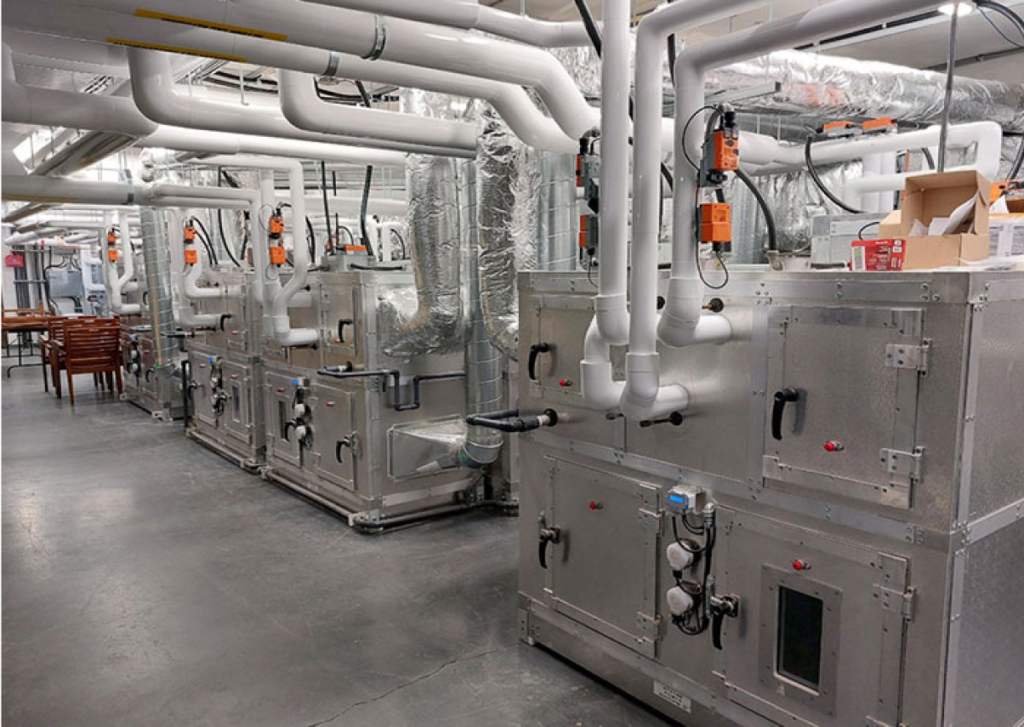
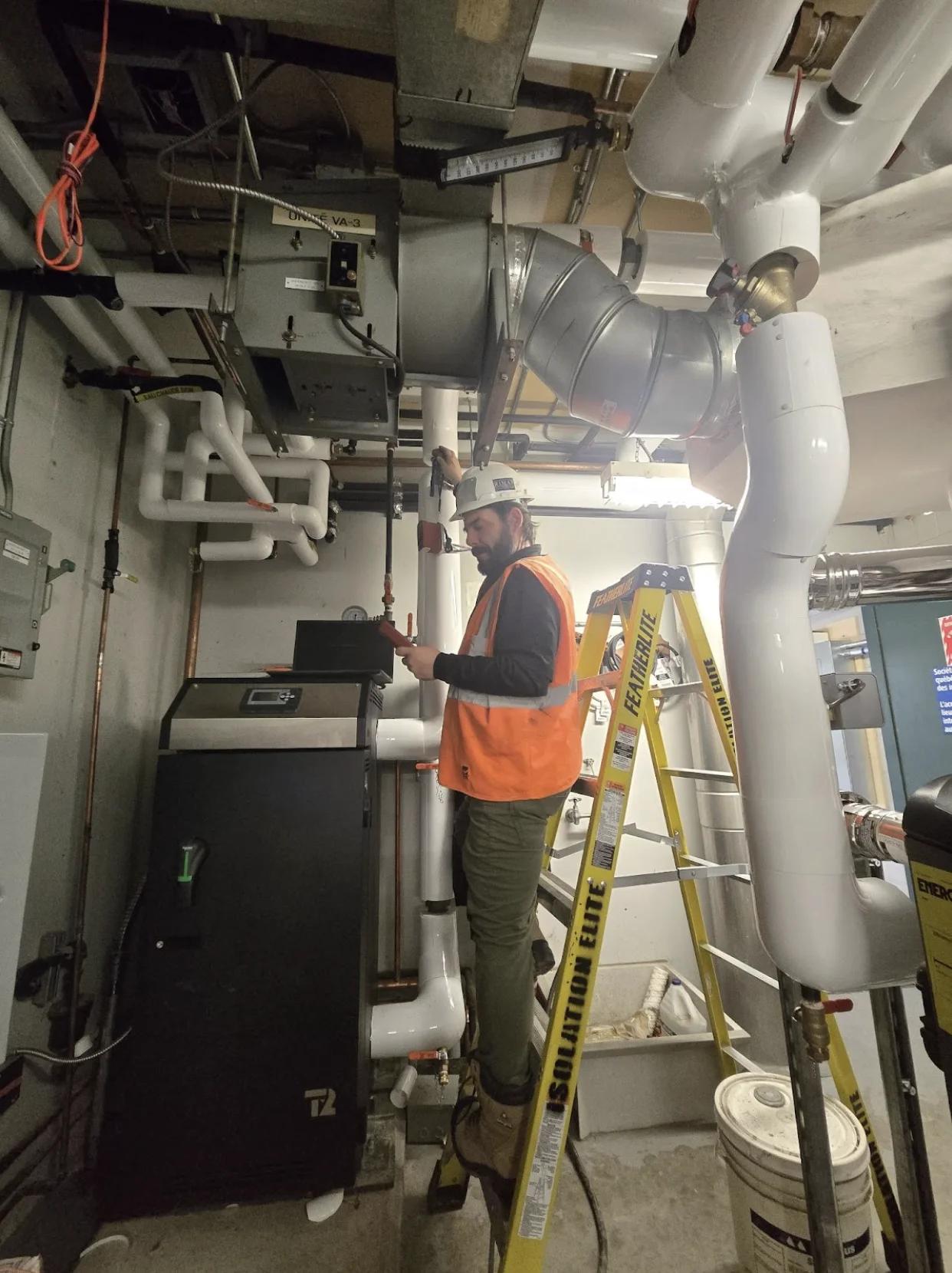
Across the province, more facility managers are turning to ASHRAE Standard 241, a new benchmark published in 2023 by the American Society of Heating, Refrigerating and Air-Conditioning Engineers (ASHRAE). The standard provides a performance-based framework for maintaining cleaner, healthier indoor air through better ventilation, filtration, and verification.
At SMP LeBlanc, we have been seeing this transition firsthand. Mechanical contractors and building owners are reviewing their systems earlier in the season, checking ventilation rates, upgrading filters, and ensuring air distribution remains balanced. The idea is to make sure every room gets the clean, refreshed air it needs before colder weather fully arrives.
Understanding ASHRAE 241 and Why It Matters
The American Society of Heating, Refrigerating and Air-Conditioning Engineers (ASHRAE) developed Standard 241 as a comprehensive framework to help commercial buildings maintain superior indoor air quality through better ventilation, filtration, and monitoring.
The standard focuses on several critical areas, such as improving outdoor air intake, enhancing filtration systems, installing monitoring sensors to track air quality in real time, and ensuring that HVAC systems can deliver the airflow and cleanliness they are designed to provide.
In practice, this means facility managers and building owners are focusing on three key areas:
- Filtration: Upgrading to MERV-13 or higher filters where systems allow to capture finer particles and improve overall air purity.
- Ventilation Balancing: Calibrating dampers and diffusers so that fresh air is evenly distributed across all rooms and floors.
- Verification and Testing: Conducting regular air and water balancing to confirm that system performance aligns with design intent.
Think of it this way. Your building’s HVAC system is like a promise you’re making to everyone inside. You’re saying, “The air you’re breathing in here is clean and safe.” ASHRAE 241 is the way you verify that promise is real.
For commercial buildings, that means taking a closer look at every component that contributes to air movement and quality. A well-balanced HVAC system does more than regulate temperature; it helps preserve the overall health of the indoor environment.
This is especially important in facilities with higher occupancy levels, such as offices, classrooms, and theatres, where consistent air distribution prevents localized stagnation and discomfort.
What ASHRAE Standards Reinforce About HVAC Balancing and Testing
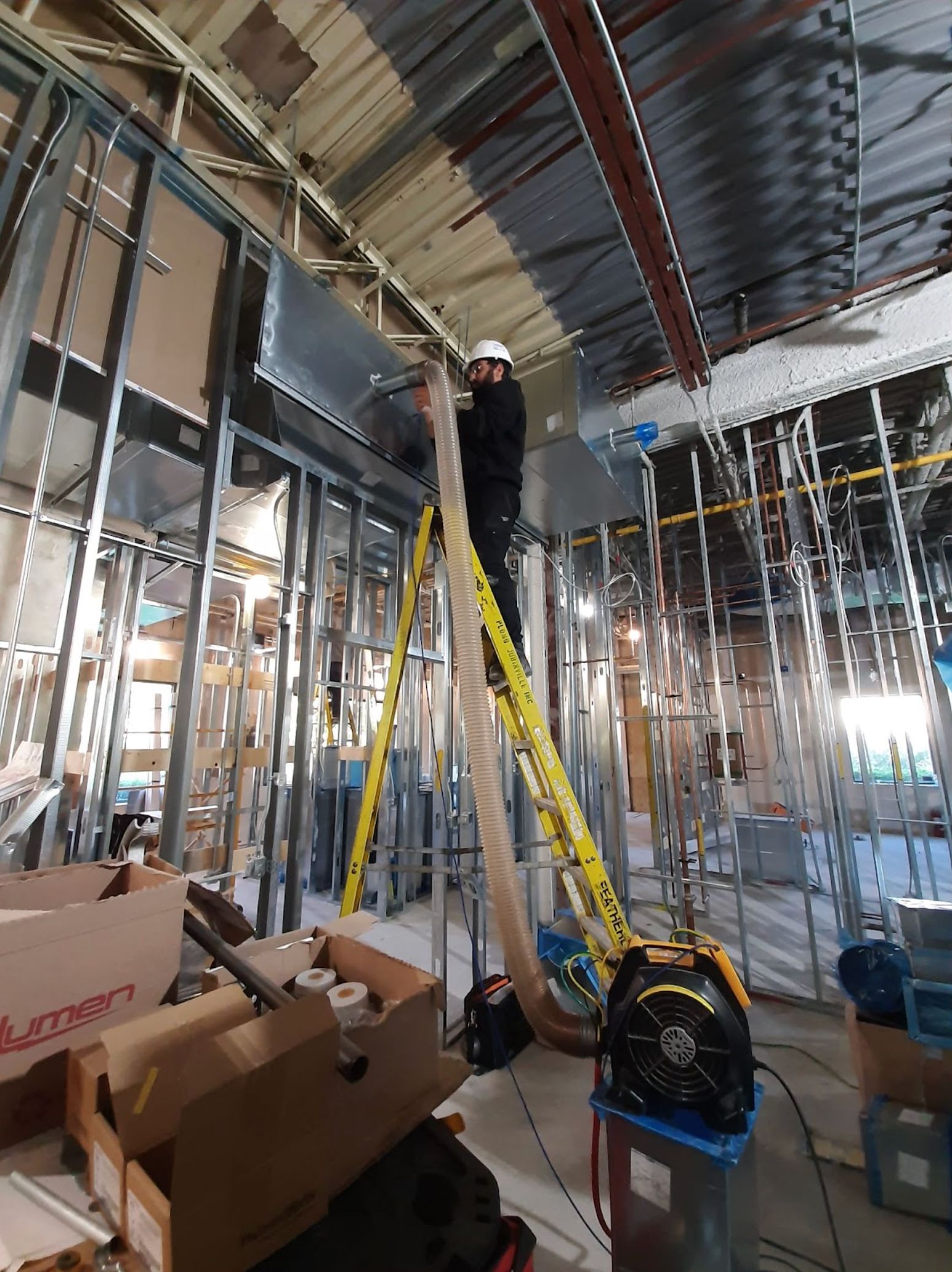
Every commercial building relies on three fundamental verification steps to maintain healthy, efficient air systems: duct testing, air balancing, and water balancing. ASHRAE standards highlight these procedures as essential to ensuring that mechanical systems perform as designed, not just when they are installed, but throughout their entire lifespan.
Duct Testing
Most HVAC issues begin where air escapes. Duct testing confirms that conditioned air reaches its intended spaces instead of leaking through joints or seams. Even small leaks waste energy and can draw in unfiltered air. Tight ducts are the foundation of efficient, healthy air delivery.
Air Balancing
After verifying ductwork, air balancing fine-tunes the system. Adjusting dampers and diffusers ensures that airflow is even across all zones and that no areas overheat or feel stagnant. Documented airflow rates keep the system stable, improve comfort, and prevent equipment strain.
Water Balancing
Hydronic systems control much of a building’s temperature. Water balancing confirms that chilled and hot water flow correctly through coils and heat exchangers. Balanced flows keep temperatures consistent, lower energy use, and extend equipment life.
Together, these three steps verify that every litre of air and water moves as intended. Buildings that follow these practices run more efficiently, provide cleaner air, and support the long-term goals promoted by ASHRAE standards for occupant health and energy performance.
What ASHRAE 241 Means for Different Building Types
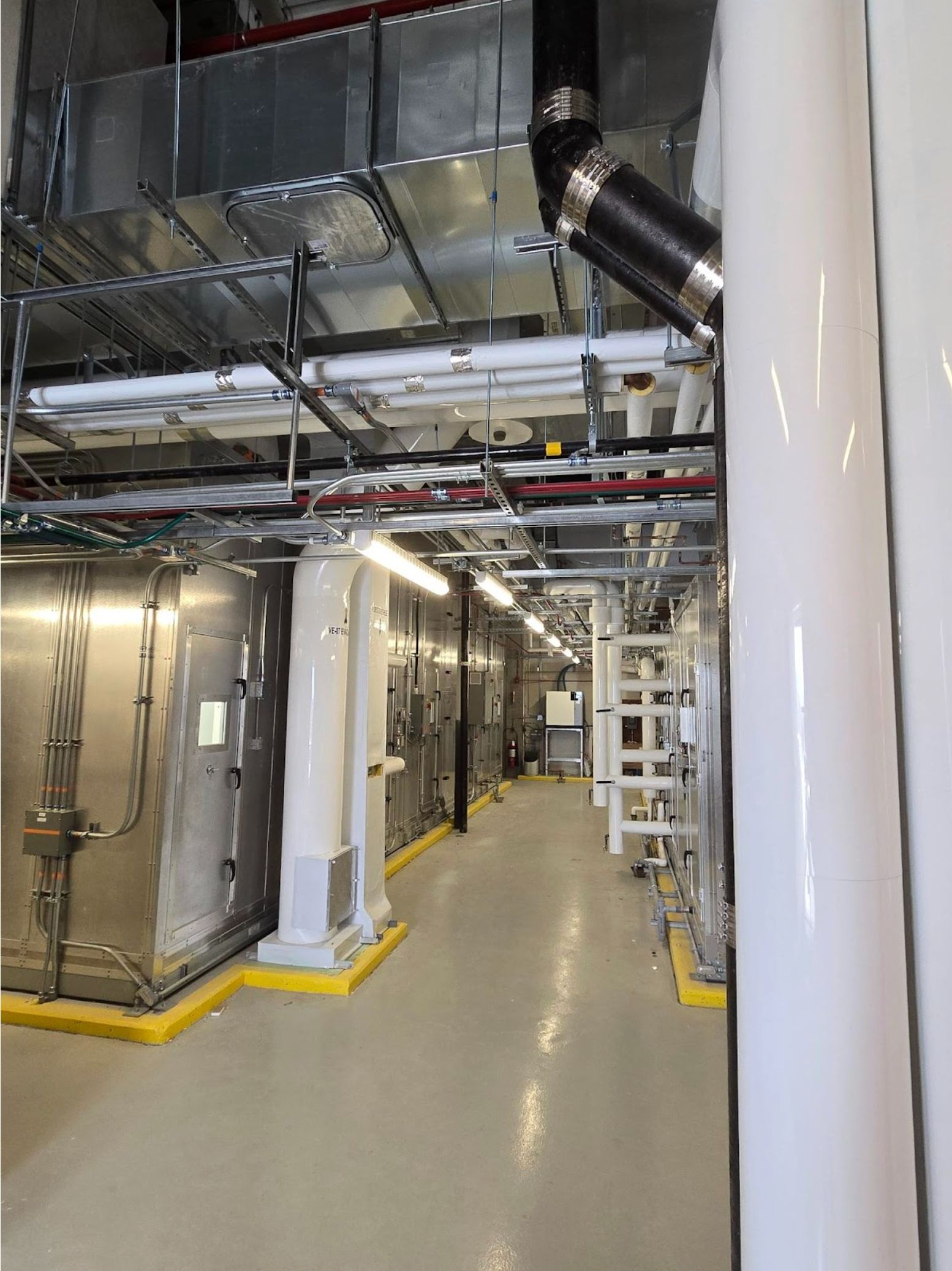
A hospital has different needs than a performance venue, and a senior residence has different priorities than an office. ASHRAE 241 is designed to be flexible enough to address all these contexts while maintaining consistent principles around clean-air delivery and occupant health.
For healthcare facilities, the focus typically centers on isolation rooms, surgical suites, and high-traffic patient areas. These spaces require the most rigorous air-quality management. Some hospitals are already using this standard as an opportunity to re-evaluate their overall ventilation strategy and strengthen compliance with established air-change and filtration targets.
Schools and universities are approaching this differently. The challenge there is dealing with high occupancy density in classrooms, gymnasiums, and common areas. ASHRAE 241 encourages education facilities to look closely at air change rates, outdoor air percentages, and whether existing HVAC systems can maintain those targets during peak use without sacrificing comfort or efficiency.
Senior residences like the facilities we’ve worked with in Quebec are treating ASHRAE 241 as a competitive advantage. When you can honestly say that your facility meets the latest pandemic-resilient ventilation standards, that becomes a meaningful differentiator for families making placement decisions.
Cultural institutions like performance venues face a unique puzzle. How do you maintain intimate seating arrangements while ensuring excellent air quality? How do you handle the reality that live performance generates more respiratory output than most other activities? The answer involves careful attention to ductwork, filtration, air changes per hour, and strategic placement of exhaust air intakes. It’s not simple, but it’s absolutely doable.
When Air Numbers Don’t Add Up, Efficiency Drops
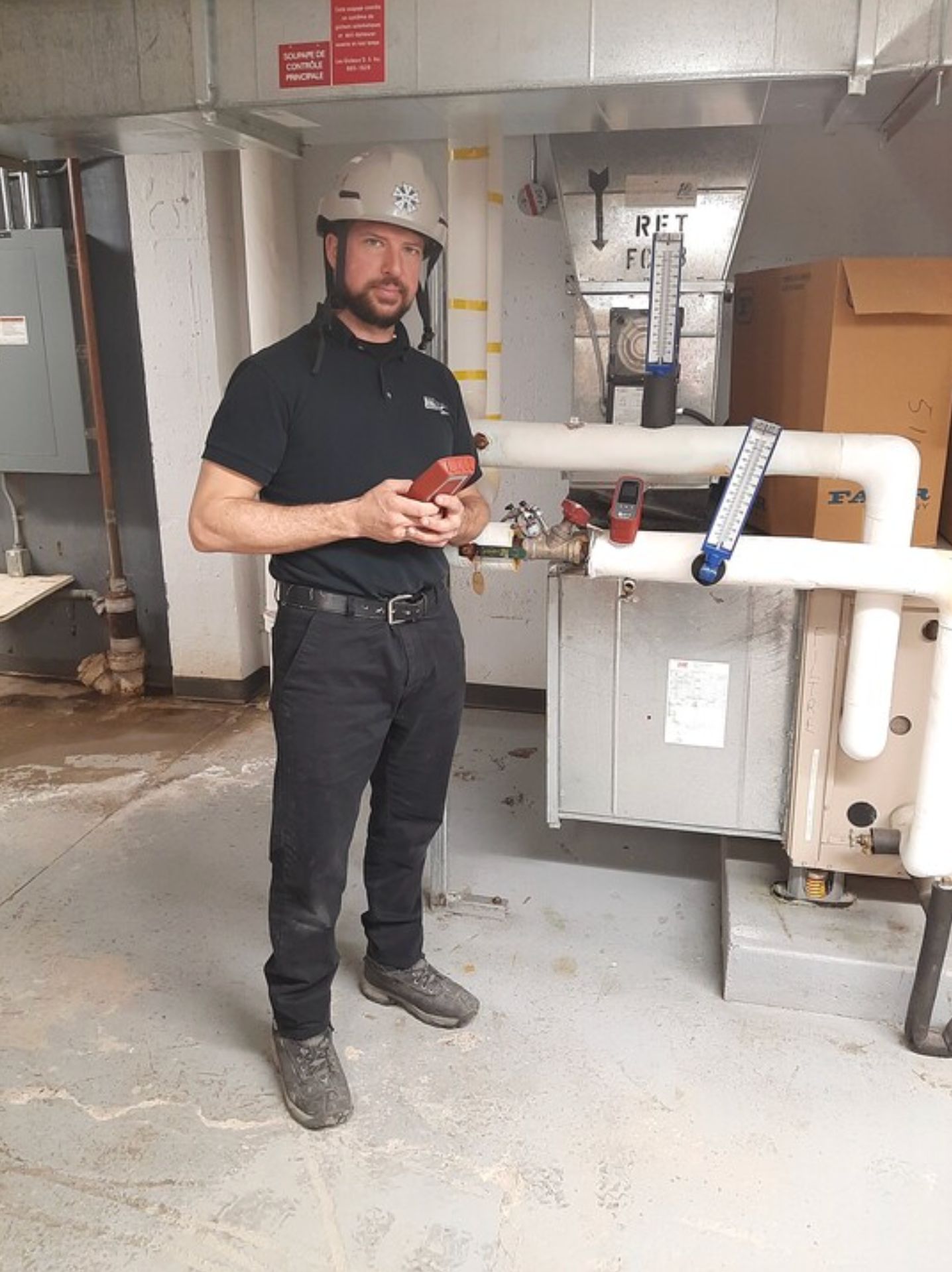
We often work with facility teams who have never measured duct leakage before, and the results can be surprising. In a typical commercial building, 10 to 30 percent of conditioned air can be lost through leaks in the ductwork. For example, a building moving about 4,700 litres per second (10,000 CFM) of air could lose 470 to 1,400 L/s (1,000 to 3,000 CFM), resulting in thousands of dollars in wasted energy each season.
The bigger concern, however, is air quality. When ductwork leaks, conditioned air escapes while unfiltered air from wall cavities and plenums can be drawn in, reducing the overall integrity of the HVAC system and its ability to deliver clean, consistent air.
Air balancing numbers are equally important. We have seen buildings where temperature differences between zones reach 3 to 5 degrees Celsius. That gap signals uneven air distribution. Once the system is balanced, those differences often drop to 1 to 2 degrees Celsius, occupant comfort improves, and energy performance stabilizes.
When you add it all up, a commercial facility that’s properly balanced, has tight ductwork, and maintains clean water loops runs with significantly less wasted energy and significantly better indoor conditions. That’s the kind of performance ASHRAE 241 is designed to achieve.
Why Adapting to ASHRAE 241 Isn’t Just Smart, It’s Necessary
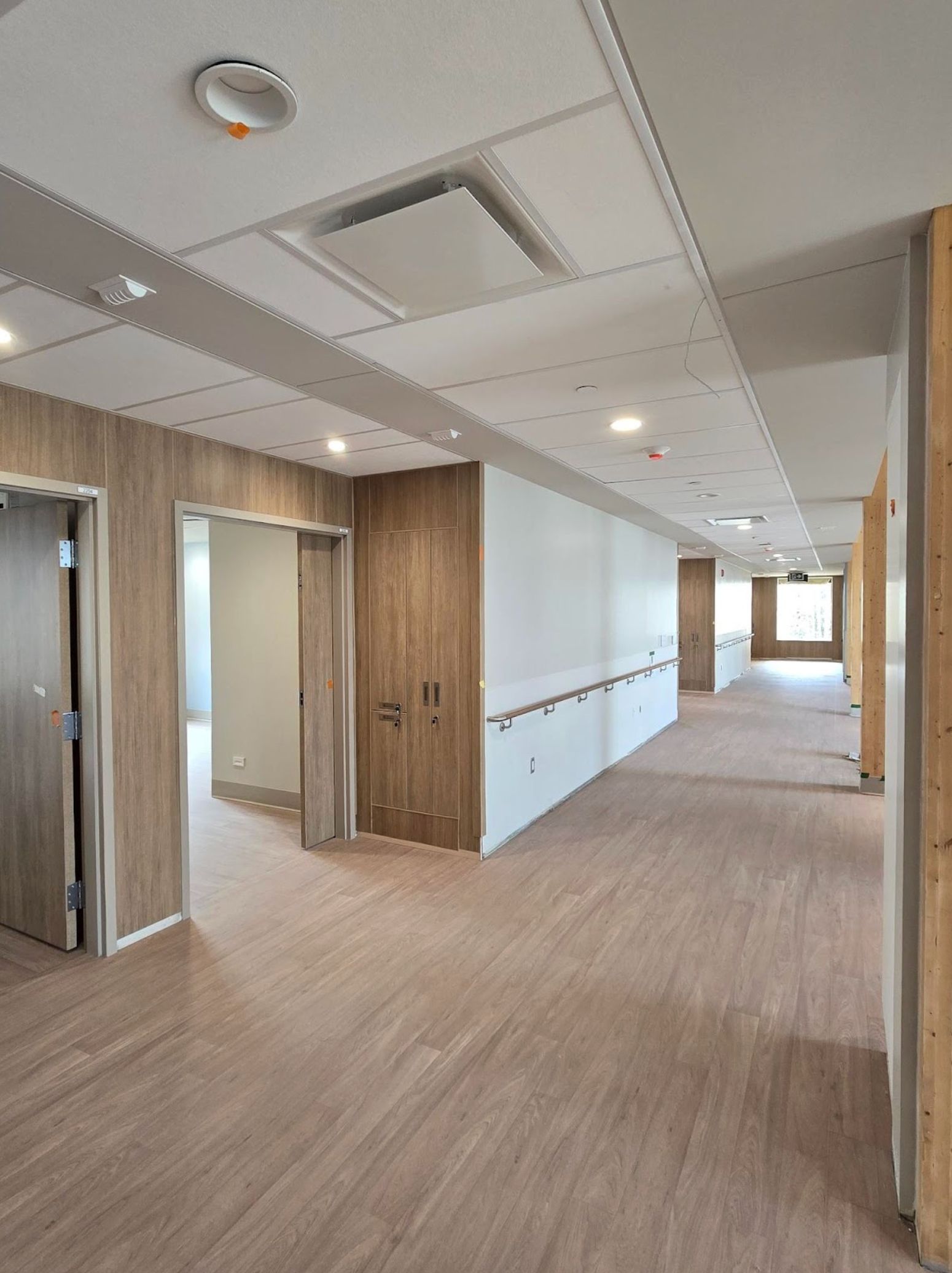
When you’re running a school, a hospital, or any facility where people count on you, confidence in your systems is not optional. It’s a non-negotiable that shapes how you plan budgets, make decisions, and communicate with your team and stakeholders.
As outdoor air cools and buildings tighten up, the systems inside take center stage. Taking time now to verify and balance airflow can prevent a long list of avoidable issues later.
Clean air may be invisible, but its impact is everywhere. It influences how people feel, how buildings perform, and how confidently facilities move into the next season.
SMP LeBlanc continues to work alongside Québec’s leading contractors and institutions to ensure that every system delivers the comfort, safety, and efficiency our communities depend on.
About SMP LeBlanc: For more than four decades, SMP LeBlanc has specialized in air and water balancing, testing, and verification for commercial and institutional projects across Québec, helping facilities achieve optimal performance and lasting comfort.