For those of you using this quieter moment to think ahead about your buildings, here’s something worth keeping in mind.
Most people don’t think about the air in their office, school, or building until something feels off. A room that’s stuffy by mid-morning. A headache that shows up every afternoon and disappears on the commute home. A meeting room where everyone seems tired before the meeting is even over.
These aren’t random. They’re signals. And in most cases, they point back to the same place: the building’s ventilation system isn’t doing what it should.
Indoor air quality (IAQ) has become one of the most talked-about topics in commercial real estate and workplace health. And for good reason. People spend roughly 90% of their time indoors. The quality of that air affects how they feel, how well they concentrate, and how often they get sick. The good news is that most IAQ problems have a practical, fixable root cause. It almost always starts with the HVAC (Heating, Ventilation, and Air Conditioning) system.
The Gap Between “Running” and “Working”
There’s an important distinction that doesn’t get made often enough: an HVAC system can be running perfectly well as a piece of equipment and still not be delivering good air quality.
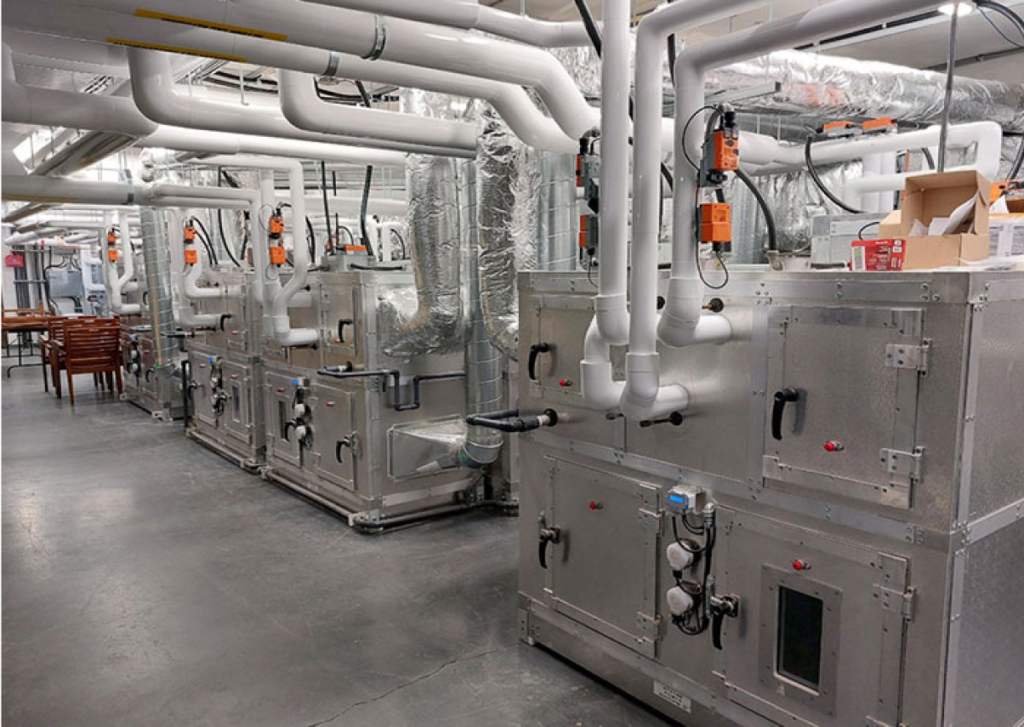
The system turns on. The fans spin, the air moves. But balanced distribution, sealed ductwork, and correctly flowing circuits are what actually get fresh air to the people inside. Without them, CO2 quietly builds up in certain rooms, some floors always feel stuffier than others, and the ventilation system is technically running but not doing its job. The equipment isn’t broken. The system just hasn’t been verified.
This is where most IAQ problems actually live.

What Actually Fixes It
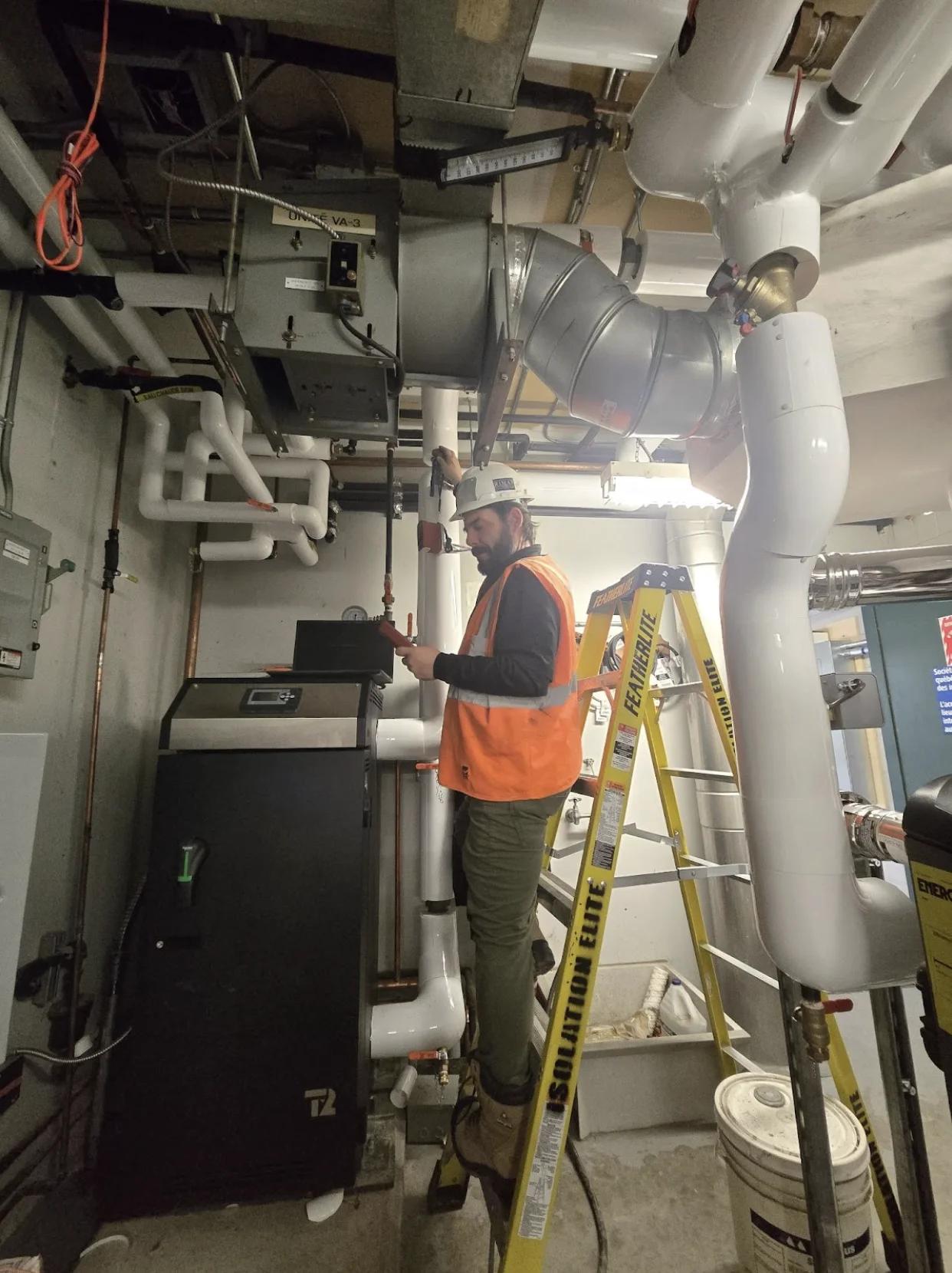
The solution isn’t complicated, but it does require field expertise and calibrated equipment. What restores a building’s ventilation performance is verification: physically measuring what the system is doing, comparing it to what the engineers designed it to do, and making the corrections needed to close the gap.
At SMP LeBlanc, every service we offer connects directly to that outcome. Air balancing confirms that each occupied space is receiving the right volume of fresh air; not too much, not too little, but exactly what the design calls for. Duct leakage testing finds where filtered air is escaping before it reaches people, which affects both air quality and energy waste. Hydronic balancing verifies that water-based heating and cooling circuits are flowing correctly, which determines how effectively temperature and humidity are controlled across the building. System analysis takes a broader look at how all of these pieces are working together and where the gaps are. And for buildings with laboratory spaces, our laboratory hood certification confirms that fume hoods are operating at the correct face velocity to keep the people working in those environments safe.
Each of these is a different angle on the same question: is this building actually delivering the air quality its occupants deserve?
The Connection Most People Miss
There’s a conversation happening in many buildings right now about indoor air quality monitoring: sensors, dashboards, real-time CO2 readings. These tools have genuine value.
But here’s what often gets overlooked: a monitoring system can tell you that air quality in Room 4B is poor. It can’t fix it. And if the underlying cause is an airflow imbalance, a leaking duct, or a hydronic system that’s out of spec, no amount of monitoring will solve the problem.
The foundation has to be right first.
A building where the air has been balanced to design, the ducts have been tested for integrity, and the hydronic systems have been verified is a building where monitoring actually means something. The readings reflect reality. The alerts point to real issues. The data is useful.
Without that foundation, you’re monitoring a problem rather than solving it.
A Simple Question Worth Asking
When was the last time someone physically verified that your building’s ventilation system is delivering air the way it was designed to?
Not an inspection. Not a maintenance check. An actual measurement, by a qualified team with calibrated equipment, comparing what your system is doing to what the engineering drawings say it should do.
For a lot of commercial and institutional buildings in Quebec, the honest answer is: not recently, or not ever.
That’s not a criticism. It’s a common situation, and it’s a fixable one.
SMP LeBlanc has been doing this verification work since 1982, and as SMACNA (Sheet Metal and Air Conditioning Contractors’ National Association) members with three generations of field experience behind us, we’re brought in by major mechanical contractors across Quebec specifically because this work requires precision and judgment that can’t be shortcut.
If the air in your building hasn’t been verified recently, we’d be glad to talk through what that looks like for your specific situation. Enjoy the holiday, and we’ll see you on the other side.
Email: estimation@smpleblanc.ca
Phone: 514‑3830352