What Changes When the Cold Arrives
Quebec winters don’t ease you in. When temperatures drop, your heating systems go from standby to full demand, sometimes overnight. Whatever was slightly off: a hydronic circuit that wasn’t quite balanced, a flow rate that had drifted, a system that was running but not really performing, becomes a real problem, fast.
The mistake most buildings make isn’t neglect. It’s timing. They wait until the system is under load to discover the issue, and by then, the options are limited, and the costs are higher.
Early autumn exists precisely so that doesn’t have to happen.
What Actually Needs to Be Verified
Three areas consistently matter for commercial and institutional buildings in Quebec:
Hydronic balancing.
Water-based heating systems drift over time. Balancing valves shift. Flow rates change as components age. A system that was balanced at commissioning may no longer be distributing heat the way the engineers designed. The result is predictable: some zones overheat, others never reach setpoint, and the equipment runs harder than it should to compensate. A hydronic balance check before the heating season identifies exactly where the drift has happened and corrects it before it becomes a comfort complaint in January.
Actual flow verification.
Knowing that a system is “running” is not the same as knowing it’s running at the right flow rate. An ultrasonic flow meter reading gives you the actual numbers: without cutting into pipes, without shutting down the system, and without waiting for something to fail. If the flow is off, you know now, not mid-winter.
System analysis.
For buildings with more complex mechanical systems, a broader look at how everything is working together, before the season changes, surfaces problems that individual checks might miss. It’s the difference between spotting a pattern and reacting to a symptom.

Why Act Now and Not in November
Two reasons.
First, the work is easier to schedule. Early autumn sits before the seasonal rush, when HVAC contractors and verification teams are fielding emergency calls and routine availability tightens. Booking at the start of the season means you get the team, the date, and the time you need, not whatever’s left.
Second, if something needs correcting, you have time. A flow rate that needs adjusting, a circuit that needs rebalancing, a valve that needs replacing; these are manageable in early autumn. In November, they’re urgent.
The buildings that enter the heating season in good shape almost always did the work in the autumn window. The ones that don’t are the ones placing the emergency calls.
This Is What We Do
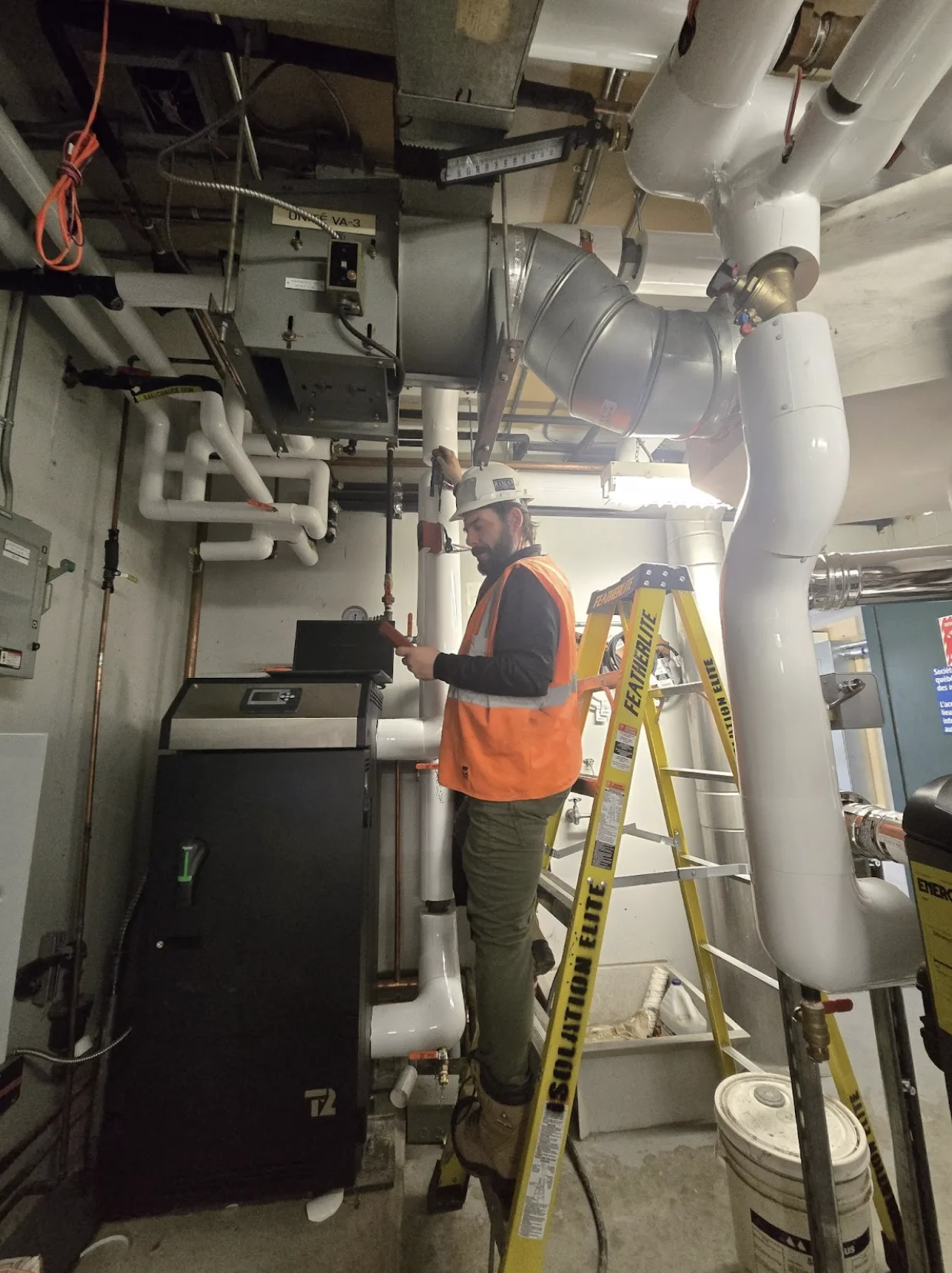
SMP LeBlanc performs hydronic balancing, ultrasonic flow meter readings, and system analysis on commercial and institutional buildings across Quebec. Major mechanical contractors bring us in for this work specifically because it requires calibrated equipment and field judgment, not just a visual inspection.
If your building’s systems haven’t been verified before this heating season, now is the time to schedule it.
Email: estimation@smpleblanc.ca Phone: 514-383-0352